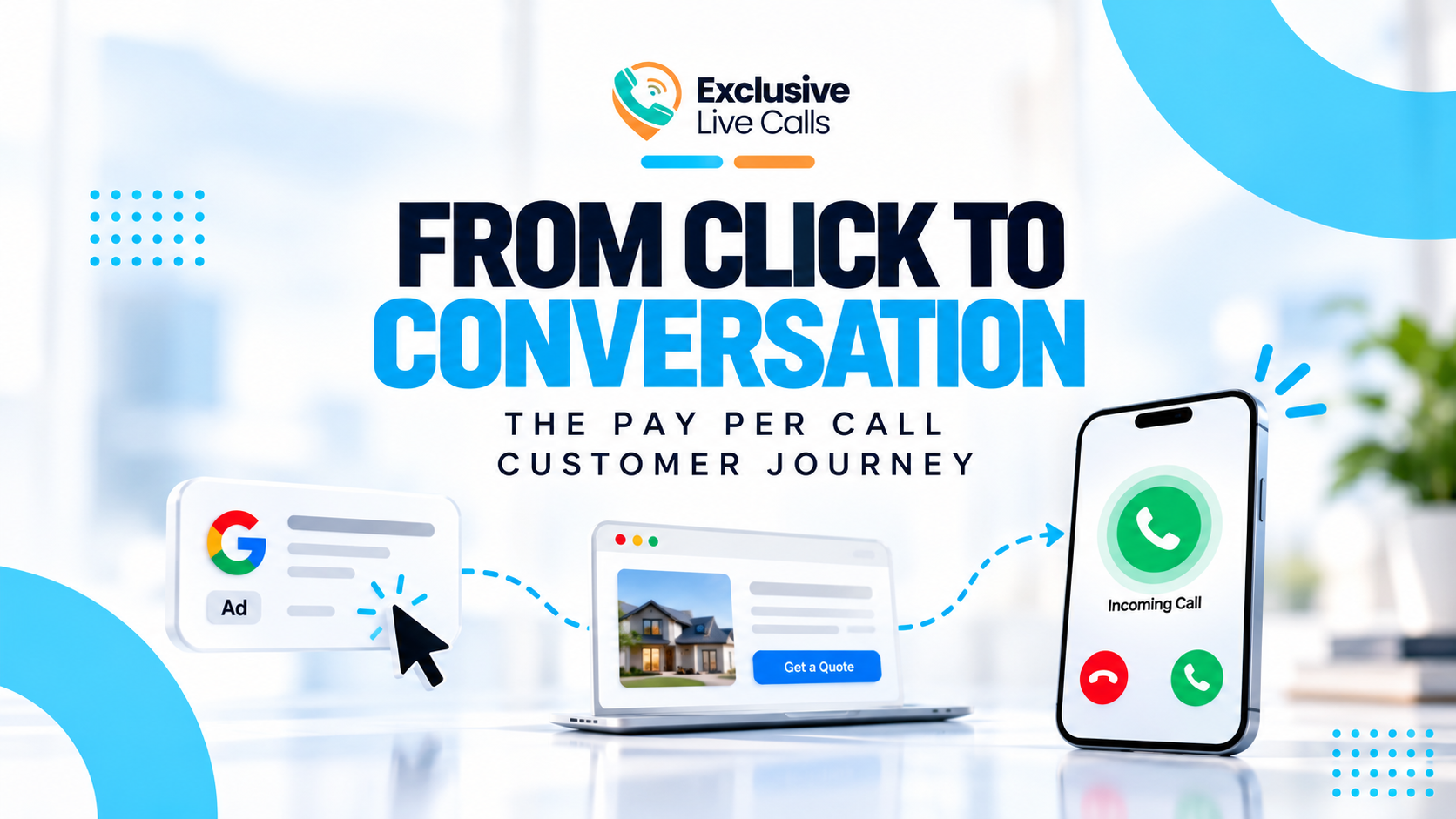
In performance marketing, understanding the Pay Per Call customer journey starts with a simple distinction: attracting someone’s attention is not the same as starting a conversation.
A click can signal interest. A website visit can show curiosity. But when a consumer decides to pick up the phone, they are taking a more direct step toward finding a solution.
When someone decides to pick up the phone, they have moved beyond simply exploring their options. They are taking a direct step toward speaking with a business that may be able to help.
That moment creates an opportunity, but what happens next determines its value.
Understanding how calls are generated, routed, and qualified helps buyers and publishers see how individual conversations fit into the larger performance marketing ecosystem.
Attention and Intent Are Not the Same Thing
Traditional digital advertising often starts by capturing attention.
A consumer sees an ad on Google, Meta, TikTok, or another channel. They click, visit a website, and then decide whether to take another action.
Some may fill out a form, while others decide to call directly.
Many simply leave the website without taking another step.
Even when a lead is generated, there is still no guarantee that a conversation will happen. A sales team might follow up minutes or hours later, and the consumer may never answer.
Pay Per Call starts further down that journey.
The consumer already has a problem or need. Instead of waiting for someone to contact them later, they are actively trying to speak with a business that can help.
That difference can be summarized simply:
Clicks create possibilities. Calls create conversations.
The value is not that one marketing channel automatically performs better than another. In fact, channels like Google, social media, SEO, and websites can all be used to generate calls.
The difference is where the business enters the customer journey. Pasted text
What Happens Between the Click and the Conversation?
To the customer, the process may feel simple.
A consumer needs a service, finds a business that may be able to help, and decides to make a call.
Behind that call, however, several things can happen before the conversation reaches a buyer.
A call can enter through a tracking number, allowing the platform to understand where it came from. The system can identify important information such as the service the customer needs and their location.
From there, campaign rules and buyer availability help determine where that call should go.
The goal is straightforward:
Connect the right call with the right buyer at the right time.
For example, someone experiencing water damage should be routed toward an available buyer that handles water damage in that caller’s area.
That routing process helps turn consumer intent into a relevant conversation instead of simply sending every call to every buyer. Pasted text
A Connected Call Is Not Automatically a Qualified Call
This is one of the most important distinctions in Pay Per Call.
A call connecting does not automatically make it qualified or billable.
Campaign requirements are established before the traffic is delivered, and those requirements determine what qualifies.
Depending on the campaign, that may include:
The right service.
The caller needs to be looking for the service the campaign is designed to handle.
The right geographic area.
The buyer needs to have coverage where the customer is located.
Required call duration.
Some campaigns require the conversation to reach a minimum duration.
Genuine consumer intent.
The person should actually be looking for the service rather than generating spam, telemarketing, fraudulent, or otherwise irrelevant traffic.
This is why simply generating more calls is not necessarily the goal.
The goal is to generate the right calls. Pasted text
Why Can a Phone Conversation Be So Valuable?
If businesses can generate clicks and leads through traditional advertising, why are they willing to pay for qualified inbound calls?
Three factors help explain it:
Intent. Timing. Customer value.
When someone picks up the phone to ask for help, they are often demonstrating stronger intent than someone simply browsing a website.
Timing matters too.
The business gets the opportunity to speak with that consumer while the need is still active, rather than trying to reconnect later.
And in many Pay Per Call verticals, the potential value of a customer can be significant.
Industries such as roofing, HVAC, plumbing, water damage, legal, insurance, and other service-based verticals may generate hundreds or thousands of dollars from a single customer.
Businesses are therefore not simply paying for a phone to ring.
They are paying for the opportunity to speak directly with a high-intent consumer at the moment they are looking for help. Pasted text
Traffic Sources in the Pay Per Call Customer Journey
Pay Per Call should not be confused with a specific traffic source.
Calls can originate from many different channels, including:
Google Search, SEO, websites, social media, paid advertising, local search, email, SMS, native advertising, and offline marketing.
Some publishers may specialize in one source. Others may combine several.
What connects these different approaches is the objective:
Find a real person with a real need and create a path for them to make the call.
Once that happens, tracking and routing technology can help connect the customer with the appropriate campaign and buyer.
That is why Pay Per Call is better understood as a monetization model that can operate across multiple traffic sources, rather than as a traffic source itself. Pasted text
What This Means for Publishers
For publishers, call volume is only one part of performance.
Generating demand is important, but the traffic ultimately needs to produce consumers who align with the campaign requirements.
That means understanding what is being promoted, where the buyer has coverage, and what qualifies for the campaign.
A large number of calls has limited value if those callers consistently need the wrong service, fall outside the accepted geographic area, or lack genuine intent.
Quality begins before the phone rings.
Publishers that understand the campaign they are sending traffic to are in a better position to generate conversations that create value throughout the ecosystem.
For publishers looking to monetize qualified inbound traffic, understanding buyer requirements and call quality is an important starting point. At Exclusive Live Calls, we work with traffic partners across multiple verticals. Learn more about becoming a publisher.
What This Means for Buyers
For buyers, receiving the call is not the end of the customer journey either.
It is an opportunity.
Once a qualified consumer is connected, the business still has to handle that conversation effectively and turn the opportunity into an appointment, job, policy, case, sale, or another relevant outcome.
That makes it important to look beyond raw call volume when evaluating performance.
Questions such as these provide more context:
blob:https://exclusivelivecalls.com/a7a24192-92a8-47f6-a26b-4136d3aa96baMeta Boxes
Use up and down arrow keys to resize the meta box pane.
Do the calls meet the campaign requirements?
Are they coming from the right geographic areas?
Is there genuine consumer intent behind each call?
What happens once the buyer answers?
The answers can provide a much clearer view of campaign performance than call volume alone.
For businesses looking to connect with consumers actively searching for their services, Pay Per Call offers a different approach to customer acquisition. Explore how to become a buyer with Exclusive Live Calls and learn more about the opportunities available across our verticals.
The Call Sits Inside a Larger Ecosystem
Behind a Pay Per Call campaign are several participants working together.
The publisher generates demand and drives the inbound call.
The network tracks the call, applies campaign rules, routes it, and connects it with an appropriate buyer.
The buyer receives the qualified opportunity and speaks directly with the customer.
And at the center of the entire process is the customer, who was looking for help in the first place.
The technology and business model may happen behind the scenes, but the fundamental idea is simple:
A customer needs a service. They make a call. The right buyer receives that call and has an opportunity to turn the conversation into revenue. Pasted text
What the Pay Per Call Customer Journey Reveals
Pay Per Call does not eliminate the importance of advertising, traffic generation, or the rest of the customer journey.
It connects those efforts to a different type of action.
A click represents an opportunity for someone to continue exploring.
A qualified call represents an opportunity for a business and a high-intent consumer to speak directly.
What happens before that conversation influences its quality.
What happens during it determines whether the call meets the campaign requirements.
And what happens after it can determine whether that opportunity ultimately becomes revenue.
The value is not simply in making the phone ring.
It is in creating the opportunity for the right conversation to happen.
Go Deeper with Pay Per Call University
The customer journey is only one part of the Pay Per Call model.
In Episode 1 of Pay Per Call University: “What Is Pay Per Call & How Does It Work?”, we break down the complete foundation of the model, including how calls are generated, tracked, routed and qualified, why businesses buy them, and the different roles within the Pay Per Call ecosystem. Pasted text
Whether you work with buyers, generate traffic, manage campaigns, or simply want to stay current on how the Pay Per Call ecosystem operates, the full episode takes the conversation further.
Watch Episode 1 of Pay Per Call University on YouTube.