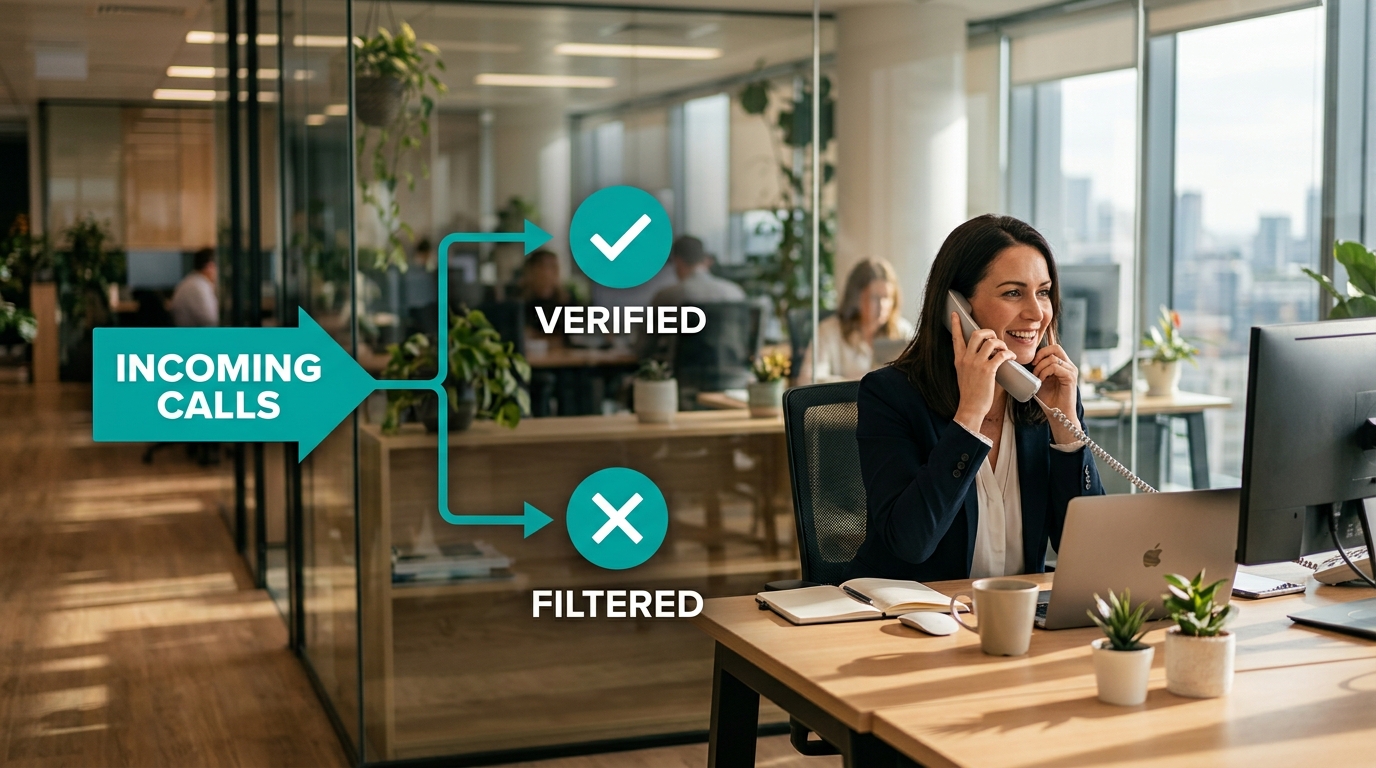
More calls sounds like a win until you start listening to them. A high volume of inbound calls that are mostly spam, robocalls, or unqualified inquiries doesn’t grow a business — it just wastes the time of whoever has to answer the phone.
The volume trap
It’s tempting to treat call volume as the metric that matters. But a spike in inbound calls that don’t convert isn’t progress — it’s noise. Every minute spent on a call that was never going anywhere is a minute not spent on a caller who was ready to buy.
What verification actually screens for
AI Call Verification checks every inbound call against a set of real-time signals before it ever reaches your team: is the number spoofed, is this a known robocall source, has this exact caller already called today, and does the call match the qualification criteria set for the campaign. Calls that fail those checks get flagged and reported separately — they don’t count against the volume you’re paying for.
Intent scoring, not just spam filtering
Filtering spam is the baseline. The more useful layer is intent scoring — evaluating whether a caller who isn’t a bot is actually a good match for what you offer, not just a real person who dialed the wrong number.
Rules that fit the campaign, not a generic filter
What counts as “qualified” is different for a personal injury law firm than it is for an HVAC company. Verification rules are set per campaign, so the bar for a qualified call actually reflects what your business needs from it.
The real cost of skipping verification
Without verification, the burden of filtering shifts onto your team — someone has to answer, listen, and decide a call was never going to convert, after the fact. That’s expensive in a way that doesn’t show up cleanly on a report, because it hides inside “handled calls” that never had a chance to close.
If your team is fielding a growing number of calls but conversion rates aren’t following, it might not be a sales problem — see how AI Call Verification filters before the call ever rings.